In 2021, Health Canada approved the first modulator therapy to treat most Cystic Fibrosis (CF) cases. Over the years, several additional modulator therapies were introduced in BC, while public coverage and eligibility for the therapies expanded. Today, almost 90 per cent of eligible people with CF are using modulator therapies.
Modulator therapies help improve the function of the defective protein that causes CF, supporting the body’s cells to perform more effectively. This can lead to improved lung function and overall health.
The modulator therapies have fundamentally changed the CF story, offering an unprecedented sense of hope and optimism for many people living with CF, and the people in their lives.
“Cystic Fibrosis was at one time treated as a childhood-specific disorder due to the dramatically shortened lifespan of those born with it. Now, we're fortunate to see many patients from BC's CF clinics living well into adulthood, many of them working, raising families and aging," shares Dr. Mark Chilvers, medical director, Cystic Fibrosis Care BC.
Dr. Mark Chilvers, medical director, Cystic Fibrosis Care BC (CF Care BC), passing a “graduation” certificate to a patient graduating from pediatric to adult CF care.
The median age of survival for someone born with CF is now 62.5. In 2000, the median age of survival was 37.
These advances presented a need for health systems to adapt.
CF Care BC is helping lead BC’s health system through this new “post-modulator therapy era.” As the provincial program responsible for coordinating specialized CF care in BC and the Yukon, CF Care BC has been working to ensure innovation in treatment is matched by innovation in care delivery.
In BC, only 30 per cent of the CF population are children, while 70 per cent are adults. As people with CF live longer and healthier lives, primary care, preventative health services and mental health support are becoming more central to their overall well-being.
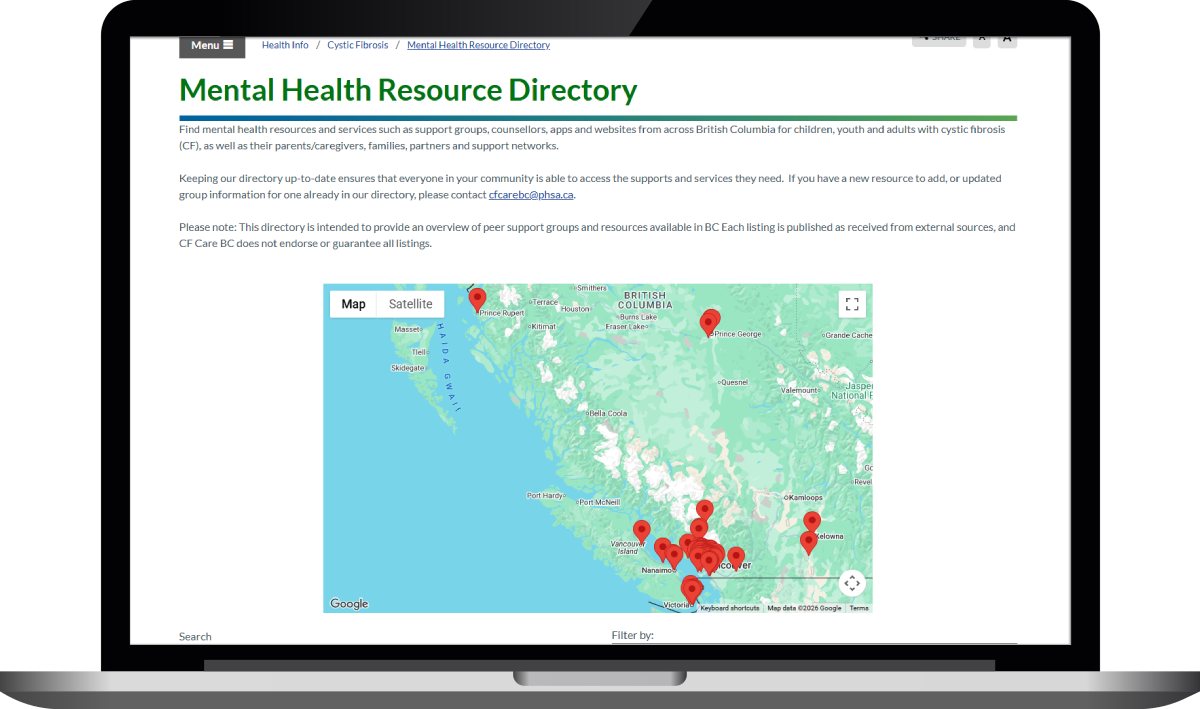 CF Care BC’s new Mental Health Resource Directory to support children, youth and adults with CF across BC in finding mental health resources and services.
CF Care BC recently secured funding from Shared Care BC to co-lead an engagement project that addresses the impact of CF population changes on BC’s health system. The goal of this project is to eventually build a system that cares for people with CF at every stage of life by:
- Strengthening and formalizing the role of primary care providers in CF care
- Enhancing CF patients’ access to coordinated and preventative care closer to home
- Updating clinical guidance and learning resources to bolster the CF care skills and knowledge of primary care providers
“The goal of this work is to ensure people with CF experience seamless and informed care, wherever they are, and no matter how old they are,” says Gia Zheng, lead, Clinical Initiatives Programs, Cystic Fibrosis Care BC.
Moments of major medical advancement don’t just change outcomes for patients – they reshape health systems. By anticipating change and building partnerships across the system, CF Care BC helps turn scientific breakthroughs into sustainable, life-long care.
CF Care BC and Shared Care BC are currently recruiting primary care providers interested in participating in the upcoming CF care engagement project. To learn more, please contact Callie Waters, callie.waters@phsa.ca.